
Sleep apnea and snoring: When should you seek medical attention?
Snoring is an extremely common problem – often the subject of jokes or complaints between partners – but in some cases it conceals a real health risk: obstructive sleep apnea (OSA). The difference between harmless snoring and a serious breathing disorder during sleep cannot be judged by ear – it requires a medical evaluation.
What is obstructive sleep apnea?
During sleep, the muscles of the throat relax naturally. In people with sleep apnea, this relaxation causes the upper airway to narrow or close completely. The result is repeated pauses in breathing, lasting from a few seconds to over a minute and recurring dozens of times a night. Each time the oxygen level drops, the brain wakes for an instant to reopen the airway – brief arousals the patient usually does not remember, but which completely fragment the deep, restorative stages of sleep. The severity of apnea is measured by the number of pauses per hour of sleep (the apnea-hypopnea index, AHI): above 5 is considered mild apnea, above 30 severe.
Simple snoring or apnea?
Not everyone who snores has apnea. Primary snoring is noise without pauses in breathing and without consequences for oxygenation. The situation becomes alarming when the noise is interrupted by long silences followed by a gasp or choking sound – this is the acoustic signature of apnea, and it is almost always noticed by the partner, not by the patient themselves.
Warning signs of sleep apnea
Consider a visit to a specialist if you have these symptoms:
- Loud snoring interrupted by pauses in breathing or choking episodes (noticed by your partner).
- Waking with a dry mouth, sore throat or morning headaches.
- Marked fatigue and sleepiness during the day – even the risk of dozing off at the wheel.
- Difficulty concentrating, forgetfulness and frequent mood swings.
- Waking often during the night to urinate (nocturia).
- Night sweats and restless, unrefreshing sleep.
Who is most at risk?
- Excess weight: The most important factor – fatty tissue around the neck narrows the airway.
- Sex and age: Men are affected more often; in women, the risk rises after the menopause.
- Alcohol, smoking and sedatives: They deepen the relaxation of the throat muscles, especially before sleep.
- Anatomical features: A deviated nasal septum, enlarged tonsils, a long soft palate or a small, receding lower jaw.
- Family history: Apnea occurs more often when close relatives are affected.
Sleep apnea in children – a special case
In children, the main cause of apnea is enlarged tonsils and adenoids. Instead of sleepiness, children often show paradoxical symptoms: hyperactivity, poor concentration, falling school performance and bed-wetting. Regular snoring in a child is not normal and always deserves an ENT evaluation – with removal of the tonsils and adenoids, childhood apnea is cured in the vast majority of cases.
The risks of leaving it untreated
The constant arousals and the repeated drops in blood oxygen place the cardiovascular system under chronic stress. People with untreated apnea have a significantly higher risk of drug-resistant high blood pressure, heart attack, stroke, irregular heart rhythms (including atrial fibrillation) and type 2 diabetes. Daytime sleepiness also greatly increases the risk of traffic and workplace accidents. Treating apnea does not just improve your sleep – it protects your heart, your brain and your life.
How is it diagnosed?
At our ENT clinic, the evaluation begins with a complete examination of the nose, palate and upper airway, including video endoscopy, to pinpoint the exact level of obstruction. The definitive diagnosis is made with a sleep study – polysomnography or simplified home sleep tests – which measures breathing, oxygenation and sleep structure throughout the night.
Treatment options
- Lifestyle changes: Weight loss, avoiding alcohol in the evening and sedatives, and sleeping on your side rather than your back.
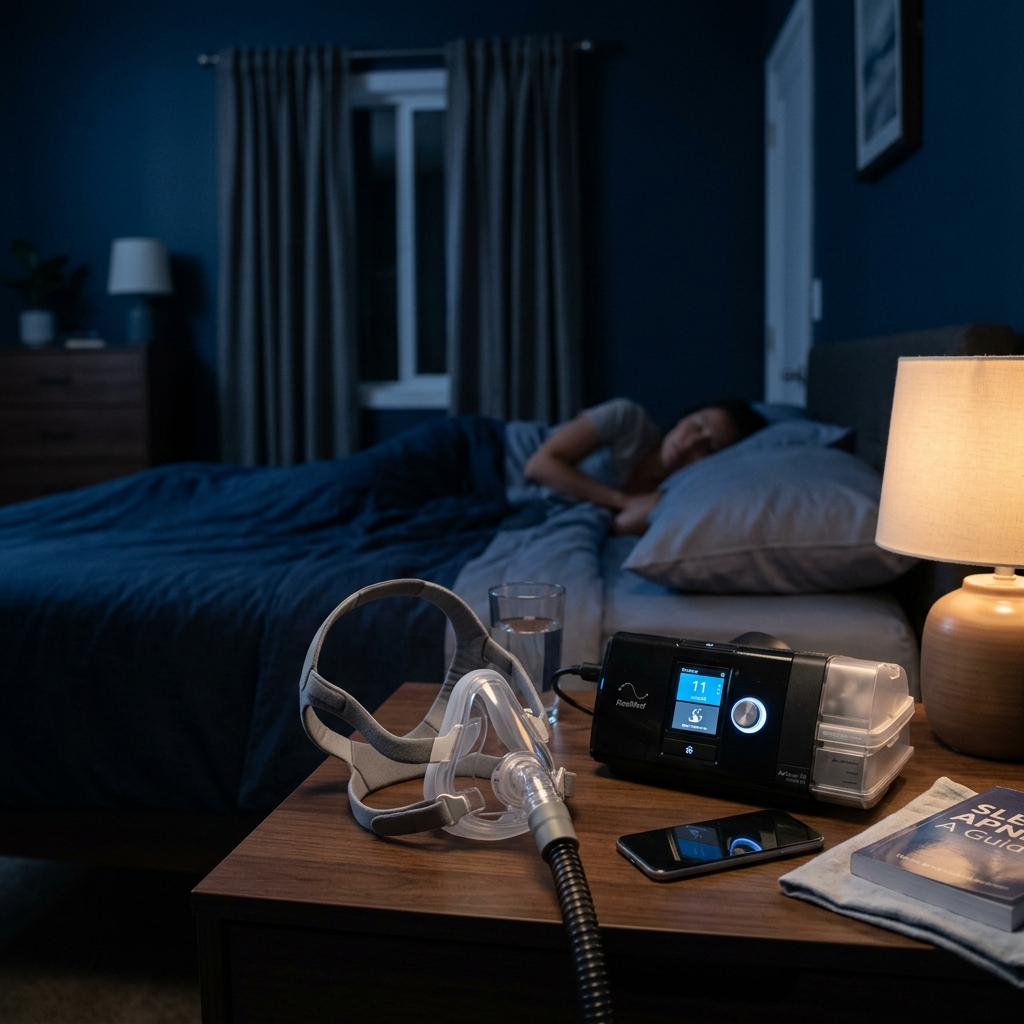
- CPAP devices: The gold standard for moderate and severe apnea – a mask connected to a device that keeps the airway open with gentle air pressure throughout the night.
- Oral appliances: Custom-made devices that move the lower jaw slightly forward, suitable for mild to moderate cases.
- Surgical interventions: Where clear anatomical obstructions exist – correction of the nasal septum (septoplasty), tonsil removal or tightening of the soft palate – surgery can offer lasting improvement and, in selected cases, a definitive solution to snoring and apnea.
If your partner has noticed pauses in your breathing, or if you wake up unrefreshed every morning despite enough hours in bed, do not dismiss it: a straightforward ENT evaluation can be the first step towards quiet nights and days full of energy.