
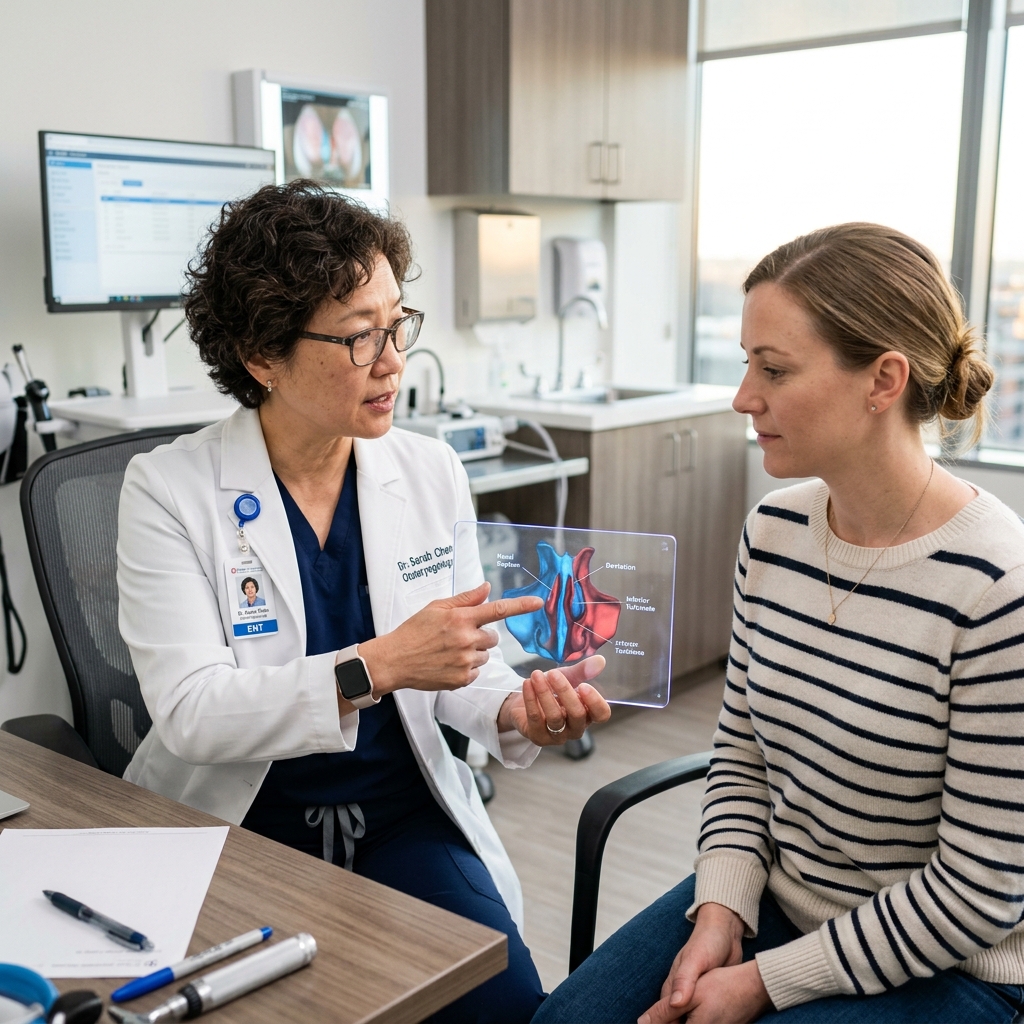
Deviated nasal septum: When is surgical intervention required?
The nasal septum is the thin wall of cartilage and bone that divides the nasal cavity into two air passages. In an ideal world this wall would be perfectly straight – in reality, most people have some degree of deviation. While mild deviations never cause problems, pronounced displacements can significantly obstruct breathing and affect sleep, energy levels and sinus health.
Why does the septum deviate?
In some cases the deviation is congenital or develops during growth, when cartilage and bone grow at different rates. In other cases it is the result of trauma – a blow to the nose in childhood, during sport or in an accident. What is striking is that the injury often goes unnoticed at the time: many patients discover the deviation years later, when the symptoms become unbearable.
Symptoms of a deviated septum
Most patients are unaware of their deviation until the symptoms begin to affect their quality of life. The most common include:
- Blockage of one or both nostrils: The obstruction becomes more pronounced during colds or allergies, when the swollen lining closes off the already narrowed passage completely.
- Mouth breathing and dry mouth: Especially at night, with frequent awakenings and a parched throat in the morning.
- Nosebleeds (epistaxis): The disturbed airflow dries out the lining over the deviated section, making it more prone to bleeding.
- Facial pressure and headaches: Blocked sinus drainage causes pressure around the forehead, eyes and cheeks.
- Recurrent or chronic sinusitis: Secretions trapped behind the obstruction become infected more easily.
- Snoring and restless sleep: Increased nasal resistance forces mouth breathing and promotes snoring, even sleep apnea.
- Reduced sense of smell: The restricted airflow carries fewer scent molecules to the olfactory area.
How is the diagnosis made?
The diagnosis is established with a simple, painless examination. After classic rhinoscopy, we use nasal video endoscopy to view the entire nasal cavity on a screen: the degree and location of the deviation, the condition of the nasal turbinates, and the presence of polyps or secretions. When sinus involvement is suspected, the examination is completed with a CT scan. This comprehensive assessment is essential, because successful treatment must address all causes of the obstruction at the same time.
Conservative treatment – always the first step
Surgery is never the first option. We begin with medical therapy: corticosteroid nasal sprays to reduce swelling of the lining, antihistamines when allergy coexists, and regular saline rinses. It is important to understand that these medications ease the inflammatory component of the blockage, but no medication can straighten deviated cartilage. If breathing remains obstructed after several weeks of consistent therapy, the definitive solution – septoplasty – is then discussed.
What is septoplasty?
Septoplasty is the standard surgical procedure for correcting a deviated septum and one of the most frequently performed operations in ENT. During the procedure, which takes around 45-60 minutes under general anaesthesia, the surgeon repositions or removes the deviated portions of cartilage and bone to open up the airway. When the nasal turbinates are enlarged, they are reduced during the same operation for the best possible result.
The operation is performed entirely from inside the nose: there is no external incision, no scar on the face, and the outer shape of the nose does not change. Only when the patient also wishes an aesthetic correction is septoplasty combined with rhinoplasty in a single procedure.
Recovery and results
Thanks to modern techniques and materials, recovery is quick and well tolerated. The painful packing of the past is history – today, thin silicone splints or self-dissolving materials are used. For optimal healing we recommend:
- A few days of rest and avoidance of strenuous physical activity for about two weeks.
- Regular saline rinses to clean and moisturise the nasal lining.
- Do not blow your nose forcefully during the first week, and sneeze with your mouth open.
- Sleep with your head elevated for the first few nights to reduce swelling.
A feeling of blockage in the first days is normal and comes from internal swelling, not from failure of the operation. After 1-2 weeks, most patients notice a dramatic improvement: free nasal breathing, deeper sleep, more energy during the day and fewer sinus infections.
Who is a candidate for surgery?
Candidates are adults and adolescents who have completed their facial growth (usually after the age of 17-18), who have persistent nasal obstruction caused by the deviation and who do not benefit sufficiently from medical therapy. If you are tired of breathing through your mouth or waking up exhausted, consult our specialists – a brief examination is enough to determine whether septoplasty is the right solution for you.